Discussing movies through the craft of fiction writing


Do you love a good romance? What do you like about it? Are you drawn to the stories where both parties fall in love at the same time? Or when one must pursue the other?

When they first meet, Prudy is engaging in a street brawl and covered in mud. She sees Jason, hefts a board over her shoulder like a baseball bat, and says, “What about you?”Throughout the movie, they both play it very close to the vest, neither of them whispering sweet-nothings or shamelessly flirting. Rather, their banter as they argue with each other is what ironically draws them closer. By the end, we see a mutual respect, two worthy opponents. However, Jason gets in the last word as he rescues Prudy from some overage juveniles throwing firecrackers under her horse. He sweeps her up and while cradling her in his arms informs them that from now on if they messed with this girl they would be messing with his girl.
He backs up and says, “What about me?”
Searching for some reason to involve him in the fight, she says, “You’re too clean.”
He then moves away quickly before she rectifies that.
***
Their next encounter is after Jason is made sheriff of the town and is on his way to the mayor’s house where he has been promised room and board. Prudy is in the kitchen in her long-handled red underwear, still a muddy mess and washing her hair. She sees Jason and her father come toward the house and panics. Instead of running to her room, which would be way less funny, she scoots out the back and ends up in the tree in her front yard. Jason comes out, spots her, and says, “You’re the strangest girl I ever met.” She says, “Go away,” and pulls her hair over her face.
***
Prudy is finally cleaned up, her hair atop her head and wearing a pretty ruffled blouse and a skirt with a bustle. She’s making biscuits and touches her face, unknowingly leaving a powdery mess. As she backs into the stove, her skirt catches fire. She doesn’t notice it until she carries the meal out to the dining room, and Jason douses her with a whole pitcher of water. Tears trickle over her floured cheeks as she whines, “I’m sick and tired of these things happening to me.” She shakes her fist in Jason’s face. “And somebody better do something about it. Soon!” Then she storms away.
***
That evening, Jason comes home and she invites him to sit with her on the porch so she can explain the stupid, silly things he’s seen her do. She tells him she felt it was dumb to have such an attractive man think she was a hopeless loony. After some light banter, and him telling her that she’s a pretty girl who loves to put her cards on the table, he says, “Why, any man would love to take you on a picnic or out for a walk in the evening. But if you’re thinking of anything more serious, I’ve got to lay my cards on the table. I’m on my way to Australia and just passing through.”
She gets her hackles up and says, “Who cares where you’re on your way to?”
He defends himself. “Well, any girl thinking of entering into any permanent relationshi—”
Interrupting him, she calls him conceited and storms back into the house, wreaking havoc by the sounds of the crashing and the cursing as she apparently keeps bumping into things in the dark.
***
A few days later, she has asked him to go for a carriage ride in the country. They get out and have a discussion near a tree. At this point, Jason has arrested Joe Danby, played by Bruce Dern, for murder. Joe is the youngest son of the meanest man in town. She tells him that Pa Danby, played by Walter Brennan, is rallying his extended family to bust Joe out of jail. She asks Jason what he plans to do about it. He tells her he thinks he’ll leave town. She can’t believe what she’s hearing. He reminds her, once again, that he’s never made a secret of the fact that basically he’s on his way to Australia, and “quite frankly, I don’t like the odds.”
She surprises him by saying she thinks that’s one of the most mature things she’s ever heard of a man doing. “Any other man,” she says, “would stick around to prove they’re mature.”
He asks, “You don’t think it sounded a little cowardly?”
“No, I told you. It’s mature.”
He begins to back peddle. “It sounded a little cowardly when I said it.”
She digs in. “Well, it isn’t. It’s mature.”
He shakes his head. “I’m surprised at a girl who will keep throwing herself at a man when she secretly thinks he’s a coward.”
“Throwing myself at you?”
“Did you really think I was going to turn tail and run at the first sign of trouble?”
“But,” she stammers, “that’s what you just said you were going to do.”
“Well, I’m not going to, so you can just forget about it.” He walks away, leaving her to wonder what just happened.
Prudy can’t leave it alone. “What do you mean your girl?”
Jason goes on. “Oh, come on. You’ve had that look in your eyes ever since I first hit town. Now, we’re going to have a little agreement. After we’re married, no matter how many kids we got, when I say we’re off to Australia, we pack up, kids and all, and head to Australia.”
Prudy asks, “What do I wanna go to Australia for?”And that’s the proposal. The disinterested hero is finally interested, and the plucky heroine gets her man, despite herself.
Jason says, “Because that's where your husband would be, and girls usually go where their husbands are.”
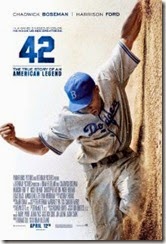
I have recently seen two biopics played by the same actor, Chadwick Boseman. The first was 42, the inspirational story of how Brooklyn Dodger Jackie Robinson broke through the color barrier. The other was Get on Up, that followed James Brown throughout his impoverished and violent youth to becoming the Godfather of Soul.
I liked them both, even though they presented themselves in totally different ways.
Many times, I’ve been approached by someone wanting to write a memoir—either their own or a beloved family member. I cringe because most of the time, these well-meaning people don’t have the writing skills to pull off such an important task. They often want to put everything in, from the spank of the newborn’s bottom to the casket being lowered. Every conversation the subject has ever had to every accomplishment they’ve ever done. More often than not, there are wonderful stories to be told, important stories that must be chronicled. And if simply chronicling these stories is the ultimate goal, than I say, have at it. Write down everything.
But if the author wants to publish this work, they must approach it much differently. No publisher in their right mind will take on a five-hundred page memoir. So what must be done to make it marketable?
Pick a theme.
Jackie Robinson was more than a phenomenal athlete in baseball, basketball, track and field, and football. He was also a political force. According to Wikipedia:
“(Robinson) chaired the National Association for the Advancement of Colored People's (NAACP) million-dollar Freedom Fund Drive in 1957, and served on the organization's board until 1967. In 1964, he helped found, with Harlem businessman Dunbar McLaurin, Freedom National Bank—a black-owned and operated commercial bank based in Harlem. He also served as the bank's first Chairman of the Board. In 1970, Robinson established the Jackie Robinson Construction Company to build housing for low-income families.”
The one constant in Jackie Robinson’s life was his activism toward equality for his race, championing African-Americans in many walks of life, not just sports.
Robinson led a full and fulfilling life. How do you put all of that in a limited number of pages or contain it within a couple of hours at the cinema?
In the movie, 42, the writer smartly concentrated on the time in history when Robinson broke through the color barrier and became the first black player in major league baseball. The theme throughout the film is “equality.” The story comes off clean, threading the theme throughout with an expert hand. 42 is a hard, but beautiful movie to watch.
Now let’s switch to Get on Up, the story of James Brown’s rise to fame.
The theme of this movie is “overcoming.” It clearly portrays Brown’s almost savant ability to overcome his circumstances through music. The approach is different than 42. It is rather vignettes of Brown’s life in non-chronological order and was, for the most part, well-done—once I realized what they were doing. It starts with the already famous singer having a meltdown over someone using his private bathroom in his place of business. The scene was vulgar, long, and drawn out. The scene ends with him shooting the ceiling with a shotgun and then leading the police in a chase. We find out later why he had the meltdown, so hang in there. The scene then changes to Brown as an eight-year-old, and shows his impoverished beginnings as the child of an immature mother and abusive father. The movie then continues to hop around from decade to decade, but what the writers did correctly was put his life in themed chapters. These chapters, that are titled on the screen, pull from many aspects of Brown’s life. It sounds confusing, but I was able to follow, and for my ADD brain, that’s something to note.
To further highlight the approach that 42 took, another movie comes to mind. To Hell and Back is the account of actor Audie Murphy’s illustrious military career. It never deviates from its theme. In fact, I don’t believe it even goes into his life as an actor, however, it’s been awhile since I’ve seen it. I do remember that it follows one theme, “humility,” or how Audie Murphy managed to stay humble as he became a decorated war hero.
This is how a memoir is supposed to be written. Pick a theme, and follow it.
The moral is: When writing a memoir or biopic, choose one theme from the subject’s life. If they’ve done tons of exciting stuff, then write tons of books. Don’t confuse the reader with things, albeit important things, that don’t speak toward that theme.
Joss Whedon (writer, producer, director) has said, “Every great villain is the hero of his own story.” I also submit that every great villain is the victim of his own story. While the protagonist works to overcome his victimization, the antagonist grovels in it. It becomes his excuse for everything thing he’s doing.
Think of all the famous villains we’ve seen in movies over the years.
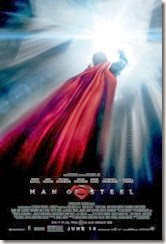
My inspiration for this villainous article came when I recently watched the newest Superman movie, Man of Steel. The character Zod intrigued me in this version of the Superman story. He seemed to have more purpose than a vigilante, still frightening, but I saw depth to him. In an interview with Port-Magazine.com, Michael Shannon, the actor who plays Zod, said, “Terence Stamp [Zod who played against Christopher Reeve] was like the Robert Plant [lead singer of the rock group, Led Zeppelin] version of General Zod. He’s like: I’m sexy, I’m badass, I’m gonna yell at you and tell you what to do. I’m more like the Woody Allen version of Zod: I’m worried, I’m upset, there’s bad things happening, what am I going to do? I’m trying to be threatening, but inside I have my doubts.” I saw this clearly as he battled the man of steel.
We must remember that Zod was, at one time, Krypton’s most dedicated and honored warrior. He was a programmed soldier, his only loyalty lying with his planet. And he became who he was because of this power. Toward the end of the movie, and the end of Zod’s time on earth, he has a heartfelt and painful monologue directed toward Kal-El (Superman, played by Henry Cavill.)
Zod: Look at this. [He holds out his hand letting earth’s dust slip through his fingers after all the destruction.] We could have built a new Krypton in this squalor. But you chose the humans over us. I exist only to protect Krypton. That was the sole purpose for which I was born. And every action I take, no matter how violent, or how cruel, is for the greater good of my people. And now, I have no people. My soul—that is what you have taken from me!
After pouring out his vulnerability, he briefly rallies and vows to make the people of earth suffer, taking them all from Kal-El one by one, as punishment.
This is how to portray a good villain. Give him purpose, give him identity, make him a victim, then allow him to implode on himself.
To continue my theme of “What do they want/What do they really want?” or the inner need of the character, I take you to a hostile planet—Earth. Or more specifically, After Earth, the sci-fi starring Jaden Smith and his dad, Will Smith. This story is about thirteen year old Kitai, played by Jaden. He is the son of the Prime Commander, Cypher Raige, played by Will, a somewhat absentee father who is ready to retire so he can be what he needs to be for his family.
They are transporting a very bad alien called an Ursa when their ship is hit by an asteroid shower and they crash land on Earth. The only survivors are Kitai and Cypher, who is incapacitated. It is up to Kitai to travel over rough terrain to find the rescue beacon that has become separated from them.
In the beginning of the movie, we see flashbacks of Kitai and his older sister. Remember the ten-minute rule I talked about in my last article? This one happens at around thirteen minutes. Something is wrong in what looks like their home, and she places him in a large terrarium with a clear bubble top. In a later flashback, she calls it a box. Something scary is happening, but we don’t know what yet. We only know that Kitai is in a box.
Kitai is a cadet whose main goal is to become a full-fledged ranger like his dad. He doesn’t pass, however, and is told to try again next year.
Before the ship goes down, Kitai wanders and ends up where the prisoner, the Ursa, is being held. One of the rangers on duty tells Kitai they are going to use the alien for “ghost training,” a trick to become invisible to the enemy. Ghosting “is when you don’t have a trace of fear.”
The ship crashes and Kitai leaves his injured father to find the beacon. The first part of his adventure proves that he really is too young for this sort of thing. He’s frightened at most every turn, but he presses on because if he doesn’t his father will die.
His father can communicate with him from the damaged cockpit. Kitai asks him about ghosting. He tells him he had been attacked by an Ursa and that after landing in the bottom of a river, he knew it was trying to drown him. As he watched his blood in the water mingled with the sunshine, he thought it looked pretty. His fear ebbed away and the alien let him go. And moreover, it couldn’t find him. He realized then that fear was the true enemy, and the alien could smell it. “Fear is not real. The only place fear can exist is in our thoughts of the future. It is a product of our imagination causing us to fear things that do not at present and may not ever exist. That is near insanity, Kitai.” He goes on to clarify that danger is real, but fear is a choice.
After several conflicts and one huge victory where Kitai stands up for himself and refuses to take orders to abort the mission and save his life, (Kitai had followed “orders” when his sister had told him to stay in the box,) he finally reaches the beacon. However, it seems that Kitai and his father weren’t the only ones to survive the crash. The Ursa is alive and well, and intent on killing Kitai.
We learn in the flashback that an Ursa had killed Kitai’s sister while he watched helplessly from the box. Kitai’s inner need is to be let out of the box where he can fight. Throughout the movie he proves this over and over again that despite his age and size, he needn’t be placed in a box. He has worth. He has skills. Had he known then what he knows now, his sister would be alive.
As the Ursa attacks him, he uses the ghosting technique he’d been told about. He lays still, and hears his deceased sister whisper to him that he’s still in the box and it’s time to come out. He also hears his father’s voice teaching him to ghost. “Root yourself in this present moment. Sight, sound, smell. What do you feel?” He becomes one with his surroundings and the fear ebbs away. The Ursa passes right over him. He then stands, opens his cutlass and lops off the Ursa’s leg. As he attacks the Ursa, he becomes the ranger that he’s always wanted to be. He’s stepped outside the box, and despite his size and age, he is a warrior. He kills the Ursa, grabs the beacon and sets it off. Rescue is on it’s way thanks to this brave young man.
At the end, as the medics are working on his father in the rescue ship, he receives the respect he now deserves. Cypher demands the medics to stand him up so he can salute his son. I love what happens next. Instead of saluting back, like the ranger Katai now is, he runs to his dad for an embrace and receives the love he hadn’t felt before.
Katai has come full circle. He’s gained love and respect from his father, and he’s stepped outside his box to become the ranger he so desperately wanted to be.
The final two lines are priceless. Katai, while still clinging to his father says, “Dad, I want to work with Mom.” And Cypher says, “Me, too.”
I think they’re both hanging up their ranger cutlasses.